


Find your investors
before you
launch your raise.
Put up a free company profile, build a following, and see how much investor interest there is before you commit to launching a raise.
Free to start. No application or intro call.
The best time to find investors is before
you need them.
Don't start your raise cold. Build investor interest now, share the milestones that matter, and let potential investors follow your company over time. When you're ready to raise, however you choose to do it, you already have people paying attention.
Build your crowd once.
Choose how you raise from it.
Crowdfunding is what we're built for, but a following of interested investors is useful for more than one kind of raise.
Open to everyone
Anyone in your crowd can invest, accredited or not. We guide you from following to live offering.
Raise from accredited investors
Market the opportunity openly and raise from a small group or a broad base of accredited investors.
Raise from people you know*
Build real relationships with investors who follow you, then bring them into a private round when you're ready.
Not ready to raise
Keep building and watching interest. We don't ask you to commit to any offering.
*Building a following on EquityCF does not prevent a later private raise. If you want to preserve that option, keep public posts focused on company updates and milestones rather than announcing a raise, sharing terms, or inviting people to invest.
On EquityCF now


From profile to raise, step by step.
Create your company profile
Tell investors what you’re building and why it matters.
Build a following
Bring in your existing network and get discovered by investors on EquityCF.
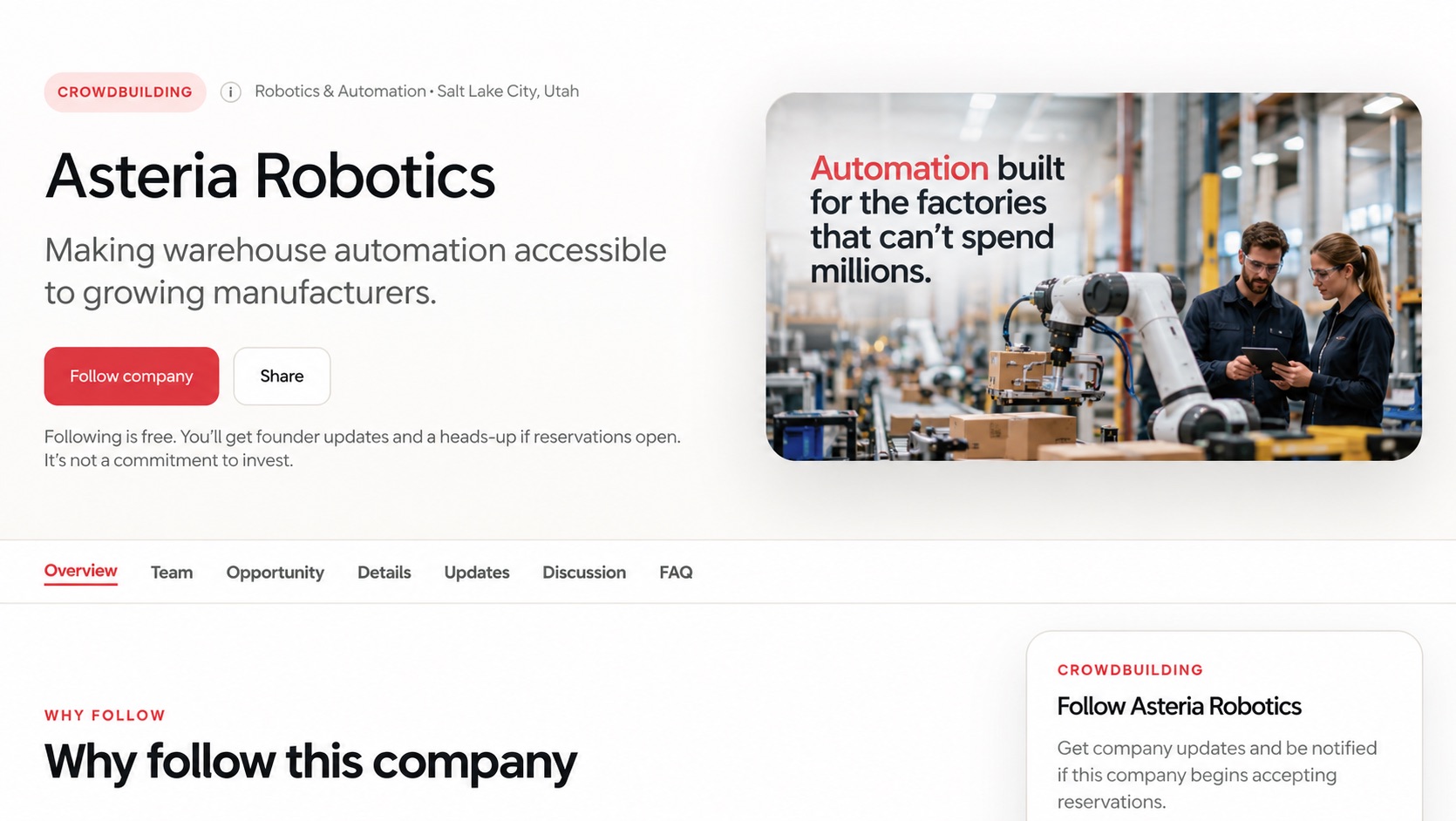
Fictional example company shown for demonstration purposes.
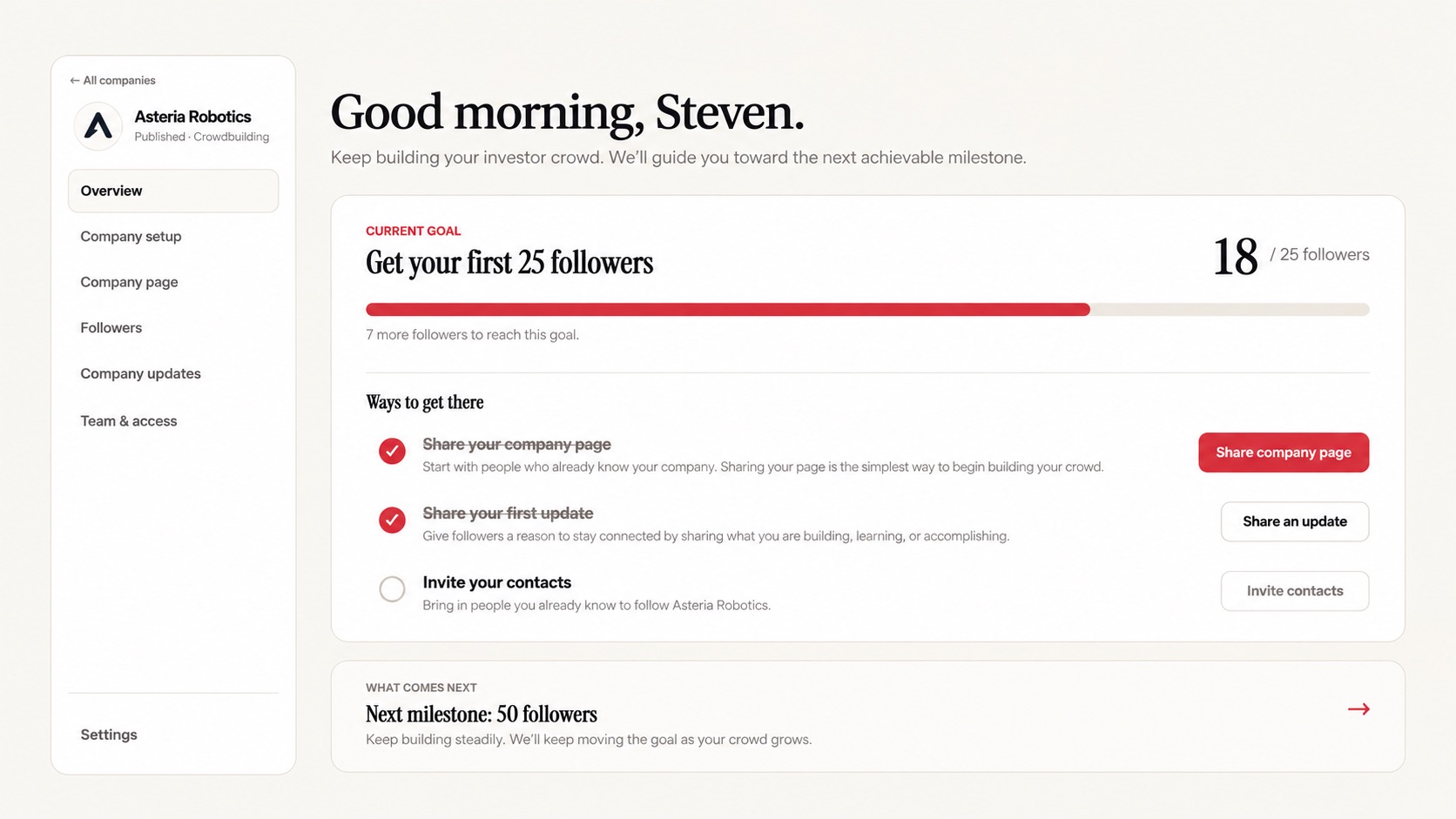
Example dashboard shown for demonstration purposes.
Measure interest
See who follows your company and collect non-binding investment pledges when ready.
Launch your raise
When the time is right, put that momentum to work with the raise with ease.
Watch a company for months, not days.
Follow companies before they raise, see founder updates over time, and decide whether to invest if and when an offering goes live.
Following is free and is never a commitment to invest.
Browse companies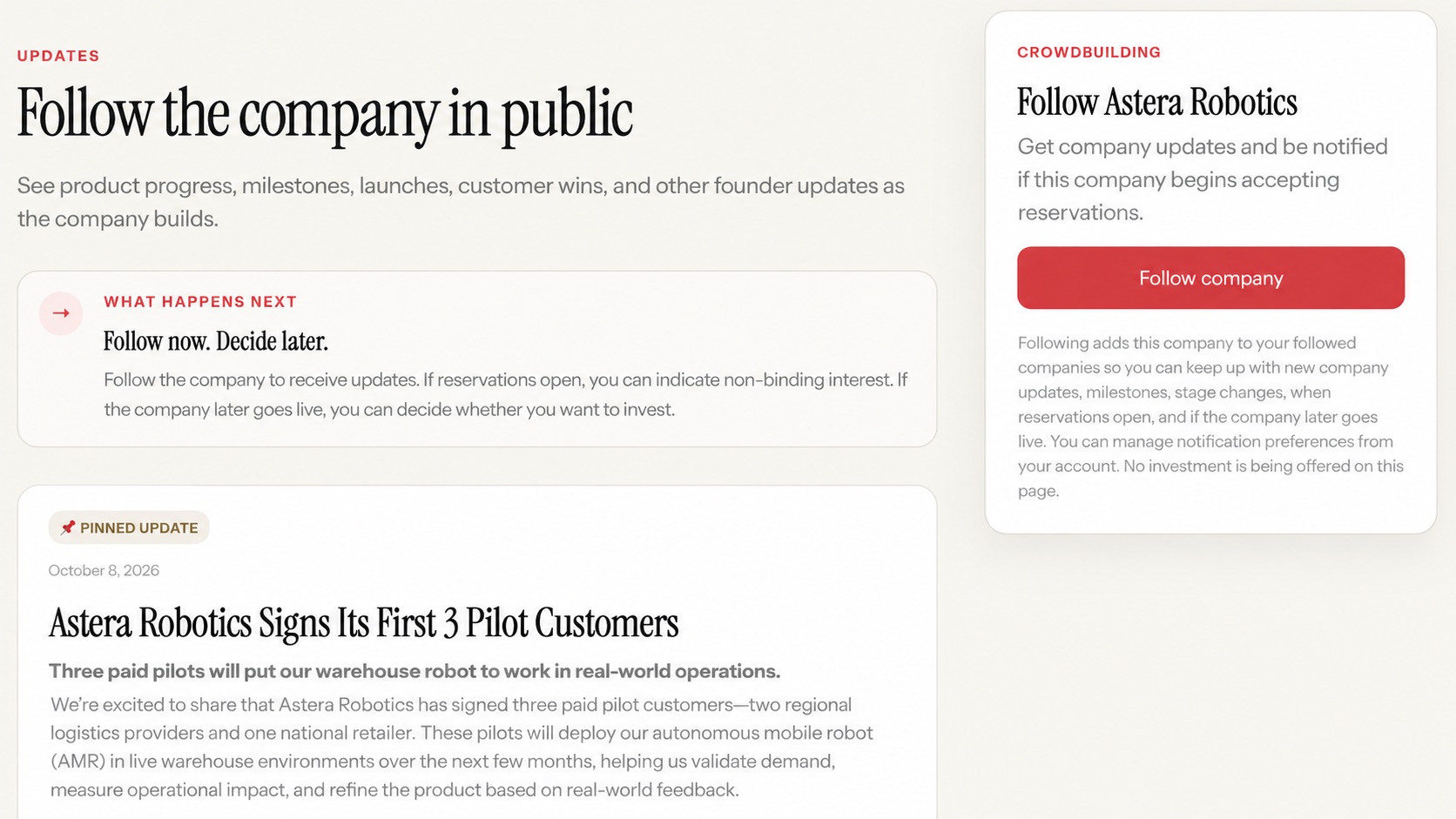
Fictional example company shown for demonstration purposes.
Common questions
Do I need an audience already?
No. EquityCF is designed to help you build and engage an investor audience over time, even if you are starting from scratch.
When do I actually start raising money?
Building a profile and following is not a live securities offering. You begin accepting investments only after the applicable offering process is completed and the offering goes live.
What does it cost?
Costs depend on the size and structure of the offering. We provide the applicable pricing before you commit to launching a raise.
Who can invest?
It depends on how you raise. Some offerings can include both accredited and non-accredited investors, while others are limited to accredited investors. Eligibility and investment limits depend on the specific offering.
What are my options for raising?
Depending on your company and goals, you may be able to crowdfund, raise publicly from verified accredited investors, or pursue a private raise. The right path depends on your situation and the securities rules that apply.
Is it okay to publicly discuss my raise?
It depends on the type of raise. Some offering structures allow public promotion, while others restrict public solicitation. Before sharing investment terms or inviting people to invest, make sure you know which rules apply to your offering.